Checking a Home for Water Damage Before Buying in Alameda, CA
Fresh paint and staged furniture can hide a history of water. A careful walkthrough tells you what questions to ask.
Why water history matters when you buy
Water damage can hide behind new paint, behind cabinets and under flooring. A past leak that was fixed may be harmless. A leak that was covered up can cause rot, odor and rebuild costs after you move in.
You cannot see everything on a showing. A methodical walkthrough, good questions and a moisture reading by a qualified inspector give you a much better picture. This guide covers each step.
Photos and a moisture meter beat a hunch
Take dated photos of anything that looks off. A pinless moisture meter in the hands of an inspector turns a guess into a reading.
What to look for room by room
| Area | Clues of past or active water | Follow-up |
|---|---|---|
| Ceilings. | Stains, fresh patches, uneven texture. | Ask about leaks and repairs. |
| Walls. | Bubbling paint, wavy drywall, new paint on a small area. | Request a moisture reading. |
| Floors. | Cupping, gaps, soft spots, mismatched planks. | Ask about flooring replacement. |
| Under sinks. | Rust, stains, soft cabinet base. | Check supply lines and drains. |
| Garage and slab edge. | Efflorescence, white powder, stains. | Ask about drainage and past water. |
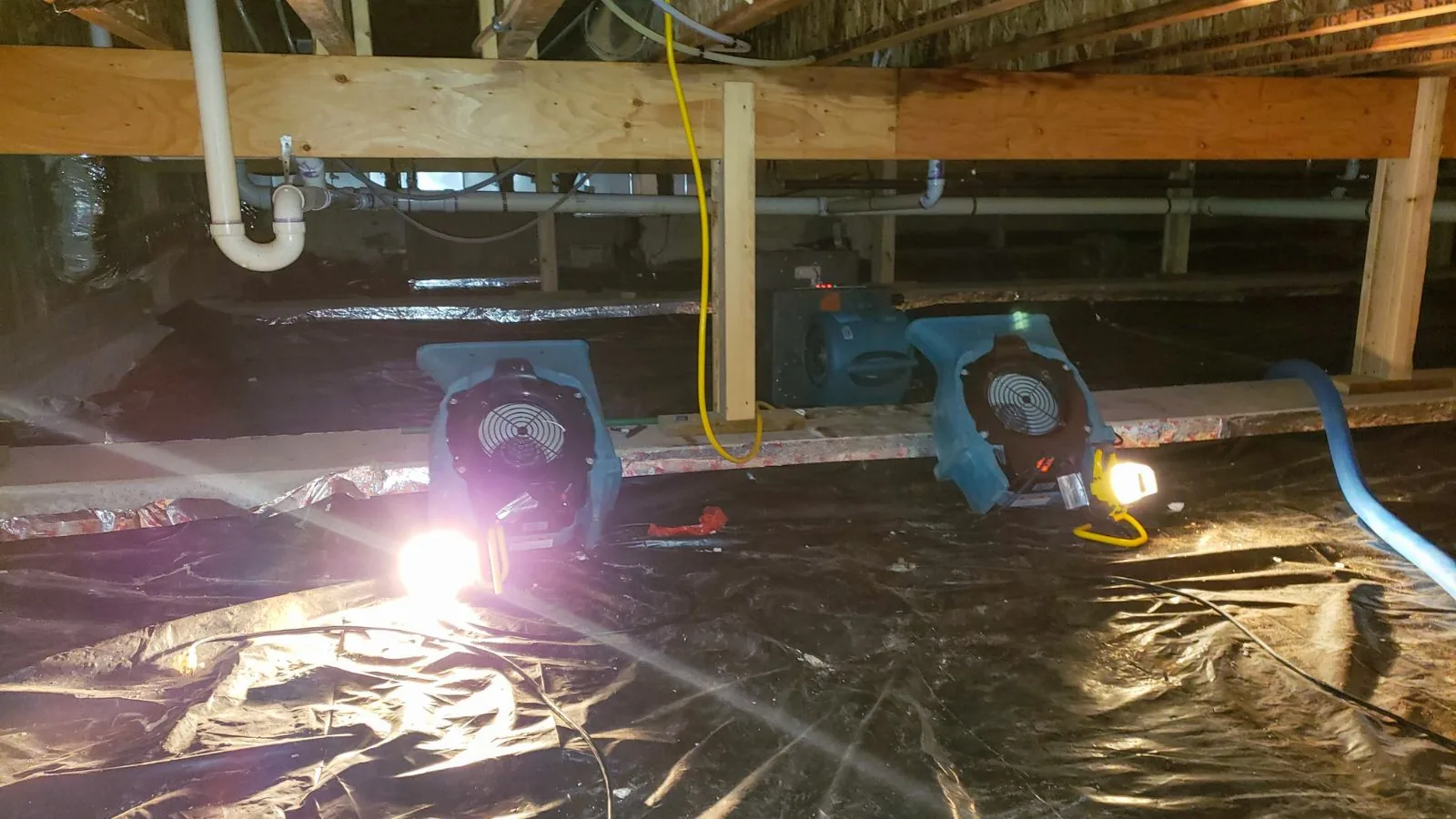
| Attic and crawl space. | Stained wood, damp insulation, odor. | Have an inspector go in. |
A fresh coat of paint in one spot is worth a question. Ask what was behind it.
A kitchen or bathroom with a new floor and old cabinets may hide a past leak. Our kitchen water damage restoration page explains what water does to cabinets and floors.
What to ask the seller
- Has the home ever had a leak, flood or sewer backup, and when?
- Was any work done to fix it, and by whom?
- Are there permits or receipts for plumbing, roofing or flooring work?
- Has an insurance claim been filed for water damage?
- Does the home have a sump pump, and has it ever run during storms?
Sellers in California typically complete disclosure forms, and your agent can explain what applies. Ask follow-up questions in writing and keep the answers.
Seen something worrying in a home you are buying?
Call and describe it. We can explain what a moisture check might show.
Using a moisture inspection
A general home inspection looks at many systems and may include a moisture meter. A water-specific inspection goes deeper into suspicious areas. Ask the inspector to read the walls and floors near any stain or repair.
If the inspector finds high readings, ask what is feeding them and what it would take to dry or replace the materials. Our wall and drywall water damage repair page and crawl space water damage page describe how those cases usually go.
Alameda local note: flood maps, permits and the sewer lateral
The City of Alameda told property owners in 2021 that more than 2,000 properties lie within the FEMA 100-year flood zone. Before you buy, check the FEMA flood map for the address and ask your insurer about flood coverage. That cost belongs in your budget.
Alameda joined EBMUD's regional private sewer lateral program on January 1, 2015, and in Alameda the owner's compliance responsibility is for the upper lateral. Ask the city and EBMUD what applies to the address you are buying.
Plumbing and water heater permits are handled by the City Permit Center at 2263 Santa Clara Ave, so ask what permits exist for past work. If you are also looking in Piedmont or Emeryville, the rules differ, and we describe them on those pages.
Reading disclosures and inspection reports
Disclosure forms list known issues, but they depend on what the seller knows and chooses to say. A clean form is not proof that nothing has happened. Compare it with what you see and what the inspector finds.
Inspection reports often mention moisture readings, stains and past repairs in broad terms. Ask the inspector to mark the location of any high reading on a floor plan. That gives you something specific to bring to the seller or a contractor.
| Report item | What it may mean | What to ask |
|---|---|---|
| Previous water staining noted. | A leak happened at some point. | Was it fixed, and when? |
| Elevated moisture reading. | Active or recent water. | What is the source? |
| Evidence of past repair. | Work was done. | Are there permits and receipts? |
| Musty odor noted. | Possible hidden moisture. | Where is it strongest? |
Questions for your inspector before the visit
- Will you bring a moisture meter and use it on walls and floors?
- Will you check the attic or crawl space if they are accessible?
- Can you test the sump pump and look at the water heater?
- Will you note any signs of past leaks, even if they look dry now?
- Can you recommend a specialist if you find high readings?
Good inspectors welcome these questions. If an inspector will not go into the attic or crawl space, ask why and whether you should hire someone who will.
Budgeting for water-related items
Set aside money for possible items such as a plumbing repair, a drying plan or a drainage fix. We do not list figures because they depend on the home and the findings. A written scope from a contractor gives you real numbers.
If you find a problem you cannot price, ask your agent whether to negotiate a repair credit, a price change or a walk-away. An early decision costs less than one made after closing.
Red flags that call for a closer look
- Musty smell when the house has been closed up.
- A new floor or paint patch with no explanation.
- Stains that look like rings or tide lines.
- Soft or crumbly drywall near plumbing.
- Sump pump with no history or a failed float.
None of these proves a problem, but each deserves a question. If several show up, request a deeper inspection or a price discussion.
What to do if you find damage
Document it
Photograph and date everything, with notes on location.
Ask for records
Request repair receipts, permits and warranties.
Get a scope
A restoration company can give a written scope of what drying or removal would involve.
Negotiate
Use the findings to ask for repairs, a credit or a price change, with your agent's help.
We explain scope and price before work starts, and we can give a written scope for a home you do not own yet if the seller allows access.
After you buy
Even a clean inspection leaves unknowns. In your first month, check under sinks, around the water heater and the washer hoses. Know where the main shutoff is and test it once.
Keep your closing records and inspection report in one place. If a leak happens later, those documents show the condition when you bought and help with your insurer.
For reference, the IICRC S500 is the published industry standard for professional water damage restoration. We name it as a guide to how drying is planned and measured, and we make no certification claim by doing so.
Home buying and water damage questions
Sometimes. Stains, patches and soft spots are clues, but a moisture reading is more reliable.
If something looks suspicious, yes. A general inspection may not go deep enough.
Disclosure rules apply in California. Your agent can explain what the forms require.
Alameda joined EBMUD's regional program in 2015, and the owner is responsible for the upper lateral. Ask the city and EBMUD what applies to the property.
We can describe what to look for and, if access is allowed, give a written scope for any wet areas.
Found damage in a home you want?
Call. We will explain what drying or removal could involve.
Call for water removal