Water Damage Drying Time in Alameda, CA: What to Expect
Most jobs take several days, but a calendar does not decide it. Moisture readings do.
The short answer
Many clean water losses reach normal readings in about three to five days of controlled drying. Deeper losses, dense materials and humid weather can stretch that to a week or more. A concrete slab can take longer still.
Those ranges are general. A small leak that was caught quickly can finish sooner. A flood that soaked framing and subfloor takes longer. Any honest estimate comes after a moisture assessment, not before.
Dry is a number, not a feeling
A wall can feel dry and still read high on a meter. Drying ends when readings return to normal for each material.
What sets the drying time
| Factor | Faster | Slower |
|---|---|---|
| Water type. | Clean supply water. | Contaminated water that needs removal first. |
| Time before action. | Caught within hours. | Left for days. |
| Materials. | Drywall, tile, laminate. | Hardwood, concrete, thick framing. |
| Humidity and temperature. | Warm, low humidity. | Cool or damp conditions. |
| Equipment. | Right amount for the space. | Too little for the wet area. |
| Access. | Open walls and floors. | Closed cavities and tight spaces. |
We adjust the plan as readings change, not by a fixed schedule.
Standing water is removed first, as our water extraction page explains. The rest of the work follows the plan on our structural drying page.
How drying actually happens
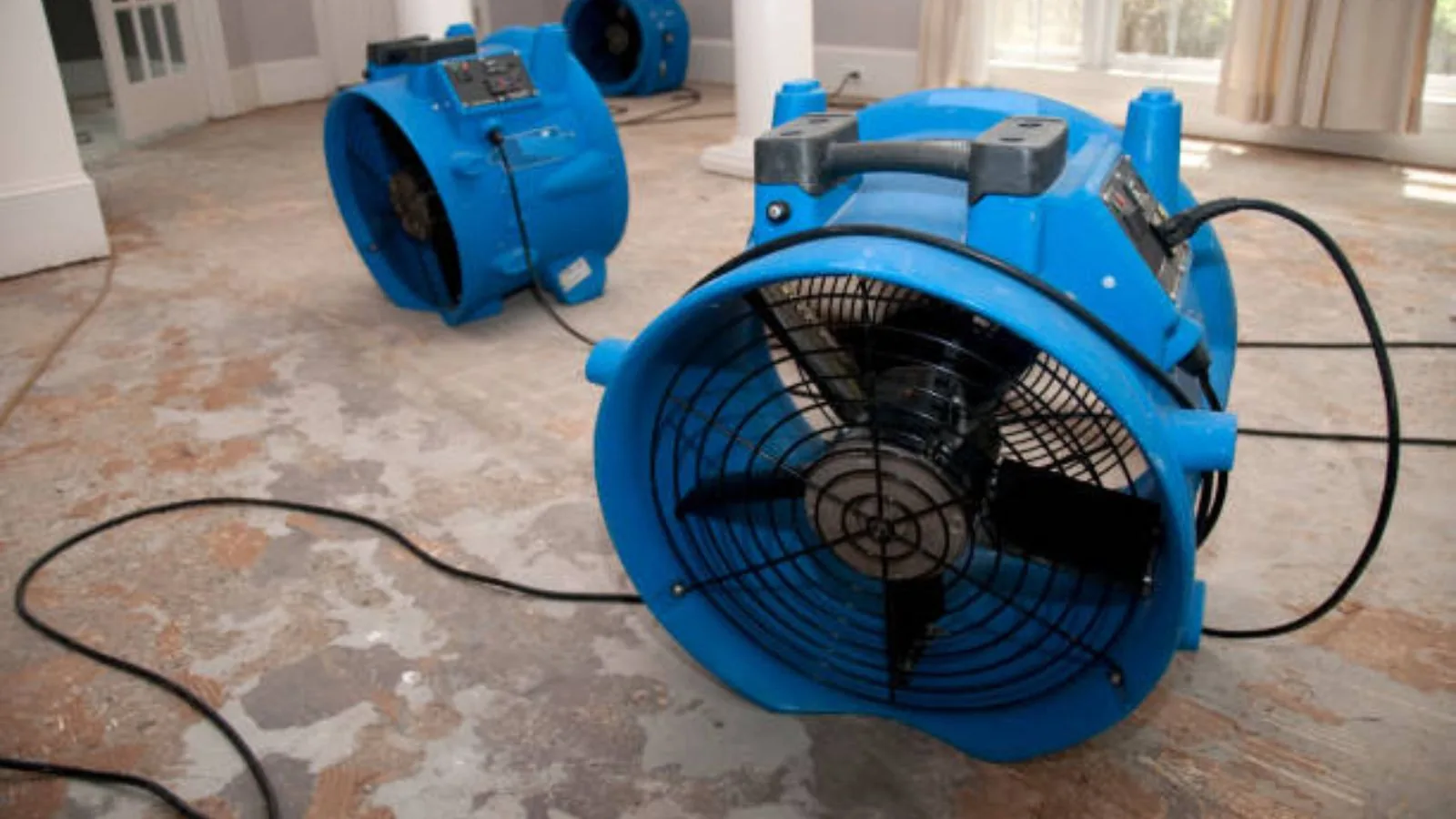
Air movers push dry air across wet surfaces and help water evaporate. Dehumidifiers remove that water from the air so the room does not fill with humidity. The two work together, and neither does the job alone.
Crews close off the space so equipment works on a defined volume of air. They read moisture at marked points each day and adjust. When a point reaches the target for its material, it is considered dry.
Set equipment
Place air movers and dehumidifiers for the wet area.
Read daily
Take readings at the same points each visit.
Adjust
Move equipment, add units or open cavities if a reading stalls.
Verify
Confirm normal readings before removing equipment.
Wondering how long your drying will take?
Call and describe the loss. A dispatcher can explain what the crew will measure first.
Typical drying ranges by material
| Material | Typical range | Notes |
|---|---|---|
| Drywall. | About three to five days. | Longer if the cavity is closed. |
| Carpet. | About two to four days. | Pad is usually replaced. |
| Hardwood floors. | About a week or more. | Mats and low humidity help. |
| Subfloor and framing. | About four to seven days. | Dense wood releases moisture slowly. |
| Concrete slab. | Many days to weeks. | Dry slowly, and conditions matter. |
Ranges are general. Readings decide each case.
Hardwood follows the steps on our hardwood floor water damage repair page, and slab moisture overlaps with our slab leak page.
Alameda local note: basements, humidity and the forecast
The City of Alameda notes that sump pumps are common in local basements, and its hazard plan lists a Basement Flooding Campaign. Below-grade spaces tend to dry more slowly because soil and concrete hold moisture. If your loss involved a basement or lower level, expect more time.
Bay-adjacent air can also be damp, and we check the National Weather Service Bay Area forecast when we plan a job. We do not publish numeric temperature figures here, because drying depends on conditions on the day. If you are in Oakland or San Francisco, we adjust the plan the same way.
What you can do to help
- Keep doors to the drying area closed.
- Do not turn off equipment, even if it is noisy.
- Keep the home at a normal temperature if you can.
- Avoid adding moisture with wet laundry or open pots.
- Tell us if you see new stains or smell new odors.
Small habits make a visible difference. Closed doors and stable temperatures keep the equipment working on the right air.
What normal readings mean
Every material has a normal moisture range, and a crew compares wet readings with dry reference points taken from an unaffected area of the same material. The goal is to match the home's own dry baseline, not a number from a chart. That is why a crew often reads a dry wall in another room first.
Readings can differ by meter type and material, so crews use consistent tools and points. A single reading means little. A line of readings falling over several days tells the story.
| Day | What the log usually shows | What it means |
|---|---|---|
| Day one. | High readings across the wet area. | Equipment starts working. |
| Days two and three. | Readings fall quickly in thin materials. | Drying is on track. |
| Days four and five. | Dense materials lag behind. | Add equipment or extend if needed. |
| Final visit. | All points near the dry baseline. | Equipment can come out. |
A drying log lets you and your insurer see progress at a glance.
Noise, power and living with drying equipment
Air movers sound like loud fans, and dehumidifiers run continuously. Plan for noise during the day and at night. Equipment draws power, and a crew will plan circuits so breakers do not trip.
- Tell the crew about sleeping schedules and work from home needs.
- Ask which rooms you can still use.
- Keep pets away from cords and hoses.
- Do not unplug equipment to charge a phone.
- Call if a unit stops, because a stalled unit slows drying.
Most people find the noise tolerable for a few days. If it becomes a problem, tell us. We can sometimes adjust placement or schedule to help.
When drying takes longer than planned
Sometimes a reading stalls. That can mean a hidden wet spot, a source that is still active or too little equipment. We look for the cause instead of waiting.
- Open a cavity to reach hidden moisture.
- Add equipment or move it closer to the stalled point.
- Check for a leak that was not fully fixed.
- Review whether a material should be replaced instead of dried.
If you feel the job is dragging, ask to see the readings. A good company shares them and explains the next step.
What happens after drying
Once readings are normal, equipment is removed and you can start repairs. Drywall, flooring and paint can be done by us or by your own contractor. Ask for the drying log so your contractor knows the materials are ready.
Do not rush repairs. Closing a wall over damp framing can trap moisture and bring the problem back. A few extra days of patience protect the rebuild.
Common questions about timing and cost
- Days of equipmentMore days mean more equipment and monitoring.
- Size of the wet areaLarger areas need more units.
- MaterialsDense materials take longer.
- Starting conditionsCool, damp days can extend the schedule.
We explain scope and price before work starts and update you if readings change the plan.
What to do while you wait for help
- Find and stop the water if it is safe to reach the valve or fixture.
- Do not walk through water that may touch outlets or power strips.
- Open interior doors so a crew can reach every wet room quickly.
- Write down when the water started and what it touched.
- Call 911 first for any gas smell, electrical sparking or sagging ceiling.
The IICRC S500 standard is the usual industry reference for water damage work. It describes water categories, drying goals and documentation. We mention it as a published guide only, and it is not a claim about our own certifications.
Drying time questions
Fans help move air, but without dehumidification the moisture stays in the room. Professional equipment is built to remove it.
Moisture readings return to normal for each material. Look at the log, not just the surface.
No. Concrete releases moisture slowly, and drying can take many days.
Normal humidity can take a short time to settle. If it stays high, ask for another reading.
It can on damp days. We adjust equipment to conditions.
Need your home dried properly?
Call. We will explain the plan and the readings before work starts.
Get a crew moving